
Varied industrial anti-Spike SARS-CoV-2 antibody assessments are used for research and in medical settings after vaccination. A world commonplace for SARS-CoV-2 antibodies has been established to attain comparability of such
Varied industrial anti-Spike SARS-CoV-2 antibody assessments are used for research and in medical settings after vaccination. A world commonplace for SARS-CoV-2 antibodies has been established to attain comparability of such
PRINCIPLE & PROCEDURE The EpiQuik Circulating Full Histone H3 Quantification Bundle (Colorimetric) is designed for measuring entire histone H3 in plasma or serum. In an assay with this tools, the
This serological assay may be utilized for functions like characterizing immune responses to viral an an infection by determining the presence of viral antigen-specific antibodies in contaminated and recovered affected
Abstract Glycans are the outcomes of the coordinated actions of glycosyltransferases accountable for specific sugar additions. Glycans present on proteins can have an effect on protein stability, transport, function, and
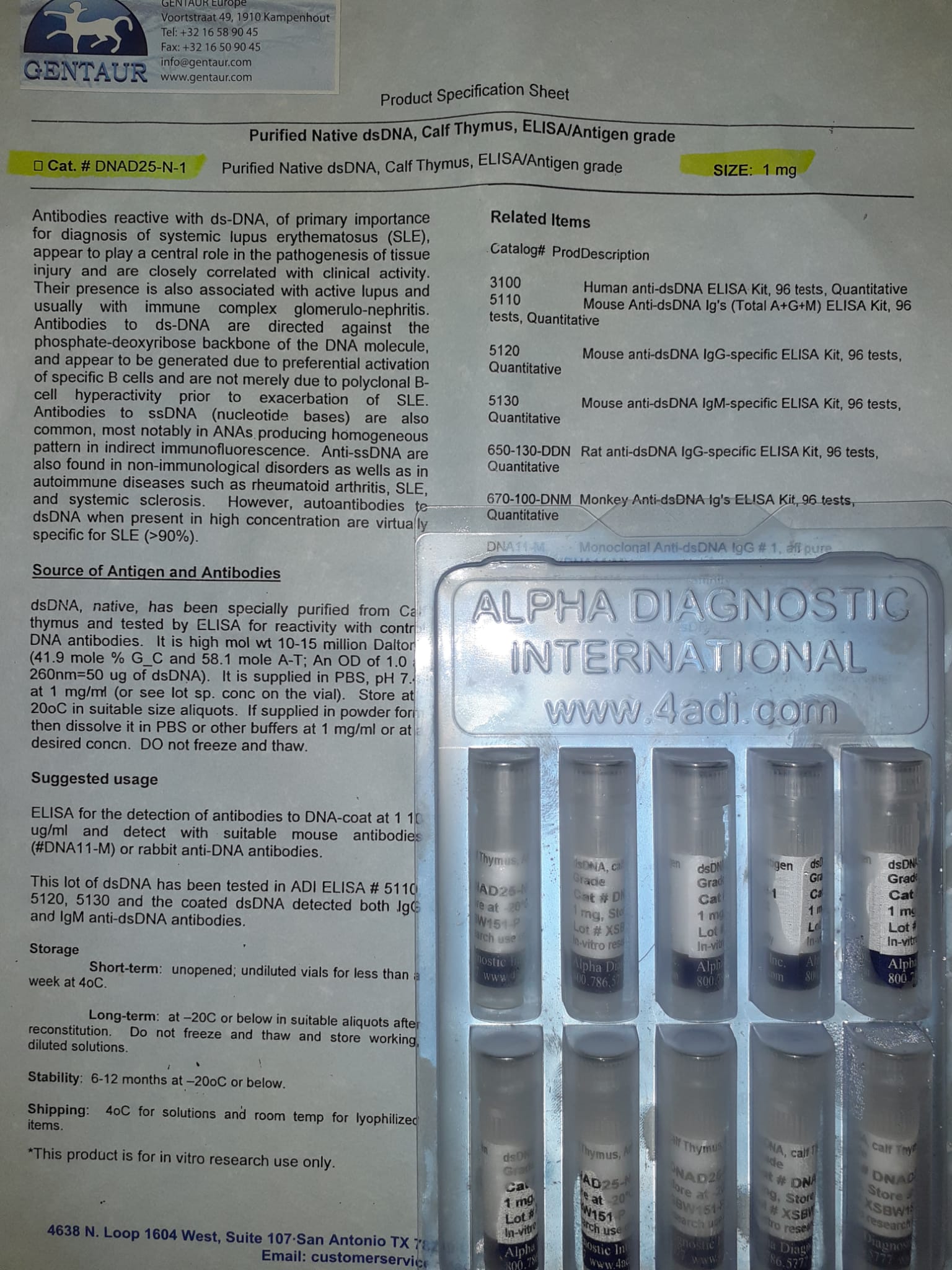
In an attempt to notice notion into their excellent binding properties, we investigated the cross-reactivity of RH14 and B3 to 7 expert DNA-binding proteins (DNA polymerases and DNA-repair enzymes), along
A thermostable and natural solvent-tolerant bacterial laccase from Bacillus pumilus ARA has been expressed heterologously and characterised, which exhibits potential decolorization capability to varied forms of industrial artificial dyes. The optimum temperature
It’s extensively accepted that mobile processes are managed by protein phosphorylation and has change into more and more clear that protein degradation, localization and conformation in addition to protein-protein interplay
Human T cells signify a heterogeneous inhabitants, together with cells with completely different phenotypical and performance properties. Regardless of, within the final years, a number of applied sciences have been
The bacterium Microbulbifer sp. ALW1 was beforehand characterised with the aptitude to interrupt down the cell wall of brown algae into high-quality items. The organic capabilities of pressure ALW1 have been but
A chitin-binding area might contribute to the antifungal capability of chitinase by means of its affinity to the fungal lateral wall by hydrophobic interactions. Complementary DNA encoding the antifungal chitinase